Showing posts with label Advice. Show all posts

Tuesday, January 24, 2017

Drink

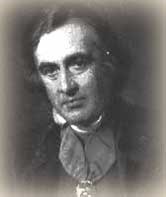
The drink evil is a leper spot on the surface of the nation, a moral canker eating into the vitality of our people, and producing effects which do not die within the year, or the life, or even the generation, but which will be reproduced from year to year, from generation to generation in a terrible portentous legacy of poverty, misery and crime.

-       Lord Curzon[1]


[1] George Nathaniel Curzon, the eldest son of Baron Curzon, was born in 1859. A brilliant student, at Eton College he won a record number of academic prizes before entering Oxford University in 1878. He was elected president of the Oxford Union in 1880 and although he failed to achieve a first he was made a fellow of All Souls College in 1883. A member of the Conservative Party, Curzon was elected MP for Southport in 1886. It was a safe Tory seat and he neglected his parliamentary duties to travel the world. This provided the material for his Russia in Central Asia (1889), Persia and the Persian Question (1892) and Problems of the Far East (1894).

In 1891 the Marquis of Salisbury appointed Curzon as his secretary of state for India. Curzon lost office when Earl of Rosebery formed a Liberal Government in 1894. After the 1895 General Election, the Conservative Party regained power and Curzon was rewarded with the post of undersecretary for foreign affairs. Three years later the Marquis of Salisbury granted him the title Baron Curzon of Kedleston, and appointed him Viceroy of India.

Curzon introduced a series of reforms that upset his civil servants. He also clashed with Lord Kitchener, who became commander-in-chief of the Indian Army, in 1902. Arthur Balfour, the new leader of the Conservative Party, began to have doubts about Curzon; in 1905 Curzon was forced out of office. He returned to England where he led the campaign against women’s suffrage in the House of Lords. In 1908 he helped establish the Anti-Suffrage League and eventually became its president.

In 1916 the new Prime Minister, David Lloyd George, invited Curzon into his War Cabinet. Curzon served as leader of the House of Lords but refused to support the government’s decision to introduce the 1918 Qualification of Women Act. Despite Curzon’s objections, it was passed by the Lords by 134 votes to 71. Curzon was appointed foreign secretary in 1919 and when Andrew Bonar Law resigned as prime minister in 1923, Curzon was expected to become the new prime minister. However, the post went to Stanley Baldwin instead. Curzon continued as foreign secretary until retiring from politics in 1924; he died in 1925. (Source: Wikipedia)

Knocking

Put the hammer in the locker;
Hide the sounding board likewise;
Anyone can be a knocker;
Anyone can criticize.

Cultivate a manner winning,
Though it hurts your face to smile
And seems awkward in the beginning.
Be a booster for awhile.

Let the blacksmith do the pounding;
That’s the way he draws his pay;
You don’t get a cent for hounding
Saint and sinner night and day.

Just for solid satisfaction
Drop a kind word in the slot,
And I’ll warrant you’ll get action
On your effort on the spot.

Kindness every time beats kicking;
Mirth is better than a frown.
Don’t waste your time picking
Flaws with brothers who are down.

And it isn’t distressing
If you give a little boost
To the man whom fates are pressing,
When the chick comes home to roost.

-       The B.M.A.A.[1] Bulletin


[1] Perhaps the Baptist Missionary Association of America

Outpouring of the Spirit

For the outpouring of the Spirit every lover of the cause of truth should pray.  And as far as lies in our power, we are to remove every hindrance to his working.  The Spirit can never be poured out while variance and bitterness toward one another are cherished by the members of the church.  Envy, jealousy, evil-surmising, and evil-speaking are of Satan, and they effectually bar the way against the Holy Spirit’s working.

-       Testimonies for the Church, Vol. VI, p.42 [Ellen Gould White][1]


[1] Ellen Gould White was born Ellen Gould Harmon in 1927, daughter of Robert and Eunice Harmon. As an adult, she became an American Christian leader whose prophetic ministry was instrumental in founding the Sabbatarian Adventist movement that led to the rise of the Seventh-day Adventist Church.

Supporters of Ellen G. White regard her as a modern-day prophet, even though she never claimed this title for herself. Support for her prophetic role is usually expressed in the language that she exhibited the spiritual gift of prophecy as outlined in the New Testament. Adventists do not consider this to conflict with the Reformation principle Sola Scriptura (“by scripture alone”) because the Bible is believed to be superior to her writings and the Bible teaches that one of the gifts to the church is the gift of prophecy. Her restorationist writings showcase the hand of God in Seventh-day Adventist history. This cosmic conflict, referred to as “the great controversy theme,” is foundational to the development of Seventh-day Adventist theology. Her involvement with other Sabbatarian Adventist leaders, such as Joseph Bates and her husband James White, would create a nucleus of believers around which a core group of shared beliefs would emerge. Ellen White believed that at the close of earth’s history Jesus Christ would return to this earth to gather His people and take them to heaven.

White was a controversial figure even within her own lifetime. She claimed to have received a vision soon after the Millerite Great Disappointment. In the context of many other visionaries, she was known for her conviction and fervent faith. White is the most translated female non-fiction author in the history of literature, as well as the most translated American non-fiction author of either gender. Her writings covered theology, evangelism, Christian lifestyle, education and health (she also advocated vegetarianism). She was a leader who emphasized education and health, and promoted the establishment of schools and medical centers. During her lifetime she wrote more than 5,000 periodical articles and 40 books; but today, including compilations from her 50,000 pages of manuscript, more than 100 titles are available in English. Some of her more popular books include Steps to Christ, The Desire of Ages, and The Great Controversy. Seventh-day Adventists believe she experienced over 2,000 visions. (Source: Wikipedia)

The Care of Gloves

Gloves tend to become more and more expensive, and a few suggestions as to how various kinds may be renovated at home may prove helpful.

White Kid Gloves—Have ready a little new milk in one saucer and a piece of brown soup in another, and a clean cloth or towel folded three or four times.  On the cloth spread out the clove smooth and neat.  Take a piece of flannel; dip it in the milk, then rub off a good quantity of soap to the wetted flannel, and commence to rub the glove downwards towards the fingers, holding it firmly with the left hand.  Continue this process until the white glove looks of a dingy yellow color.  Lay it aside to dry.  Old gloves cleaned in this way will soon look nearly new—soft, glossy, smooth, well shaped, and elastic.  They must be well pulled out when they are dry.

Yellow or Tan Kid Gloves—Get some pure benzine from a chemist.  Put the gloves on stretchers or on [unclear], and rub them with a [unclear] sponge or flannel saturated with benzine.  Hang in the air [unclear] if you have no stretchers [unclear] piece of wood or roll of  [unclear] each finger and thumb to keep these in shape.  Remember that benzine is highly inflammable.

Undressed Kid Gloves—Draw the gloves on your hands and freely rub them with stale bread crumbs and any very dirty part treat with pure benzoline.  Black gloves which have grown white at the seams and fingertips may be lightly brushed with the tip of a feather dipped in a teaspoonful of salad oil in which a few drops of black ink have been dissolved.

Light colored suedes may be washed and dried on the hands or on a pair of glove forms, using white soap boiled in milk as a suds, and rubbing them with flannel, then with warm water, and finally with a dry flannel.


The Power of Thought

I hold it true that thoughts are things endowed with bodies, breath and wings,
And that we send them forth to fill the world with good results—or ill.
That which we call our secret thought speed to the earth’s remotest spot,
And leaves its blessings or its woes like tracks behind it as it goes,
It is God’s law.  Remember it in your still chamber as you sit
With thoughts you would not dare have known, and yet make comrades when alone,
These thoughts have life; and they will fly and leave their impress by and by,
Like some marsh breeze, whose poisoned breath breathes into homes its fevered death.
And, after you have quite forgot or all outgrown some vanished thought,
Back to your mind to make its home, a dove or raven it will come
Then let your secret thoughts be fair; they have a vital part and share
In shaping worlds and moulding fate—God’s system is so intricate.

-       Ella Wheeler Wilcox[1]


[1] Ella Wheeler was born in 1850 on a farm in rural Johnstown, Wisconsin, the youngest of four children. The family soon moved to north of Madison. She started writing poetry at an early age, and was well known as a poet in her own state by the time she graduated from high school. When about 28 years of age, she married Robert Wilcox. They had one child, a son, who died shortly after birth. Not long after their marriage, they both became interested in Theosophy. Early in their married life, the couple promised each other that whoever went first through death would return and communicate with the other. Robert Wilcox died in 1916, after over thirty years of marriage. She was overcome with grief, which became ever more intense as week after week went without any message from him. She went to California to see Max Heindel, confused and seeking help in her sorrow. She describes the meeting:

In talking with Max Heindel, the leader of the Rosicrucian Philosophy in California, he made very clear to me the effect of intense grief. Mr. Heindel assured me that I would come in touch with the spirit of my husband when I learned to control my sorrow. I replied that it seemed strange to me that an omnipotent God could not send a flash of his light into a suffering soul to bring its conviction when most needed. Did you ever stand beside a clear pool of water, asked Mr. Heindel, and see the trees and skies repeated therein? And did you ever cast a stone into that pool and see it clouded and turmoiled, so it gave no reflection? Yet the skies and trees were waiting above to be reflected when the waters grew calm. So God and your husband’s spirit wait to show themselves to you when the turbulence of sorrow is quieted.

Several months later, she composed a little mantra which she said over and over: I am the living witness: The dead live: And they speak through us and to us: And I am the voice that gives this glorious truth to the suffering world: I am ready, God: I am ready, Christ: I am ready, Robert. Wilcox made efforts to teach occult things to the world during World War I years:

As we think, act, and live here today, we built the structures of our homes in spirit realms after we leave earth, and we build karma for future lives, thousands of years to come, on this earth or other planets. Life will assume new dignity, and labor new interest for us, when we come to the knowledge that death is but a continuation of life and labor, in higher planes.

Such views were received for the most part with scorn and disbelief by the public.
A popular rather than a literary poet, her poems express sentiments of cheer and optimism in plainly written, rhyming verse. Her world view is expressed in the title of her poem Whatever Is—Is Best.  (Source: Wikipedia)

A Health Program

Dr. C. Ward Crampton,[1] director of physical training for New York schools, has arranged a hygiene program for children which if adopted would surely promote health and bodily efficiency in the schools.

Little of the work is under the direct control of teachers, but his teaching and advice in the matter will nevertheless be of much value.  Following is the programme:

  1. Rise promptly.
  2. Take breathing and setting-up exercises appropriate to the grade.
  3. Wash (warm water and soap) hands, (hand brush) face, neck and chest.  Clean finger nails
  4. Clean the teeth.  Brush the gums and the whole mouth and rinse the mouth.  Drink a glass of water.
  5. Dress with inspection of clothes as to cleanliness.
  6. Eat slowly at breakfast and chew well.
  7. Prepare for school.  Books and clothes clean and in order.
  8. Observe regulations as to entering school.
  9. Care for outer clothing.  Attend to order of desk and prepare for daily morning hygiene inspection.
  10. Keep correct sitting and standing posture in school.
  11. Drink water at recess.  Use individual drinking cups, or bubble fountain.
  12. Return home for lunch without loitering.  Wash before lunch.  Eat slowly.
  13. Play in fresh air after school.
  14. Study.  Pay attention to lessons and finish the work.
  15. Wash and prepare for evening meal.
  16. Prepare for bed early.  Wash out clothes in order and open window.


[1] Charles Ward Crampton, 1877-1964.  His books include:
Dancing for Men – 1908
The Folk Dance Book – 1909 & 1928, A. S. Barnes
Blood Ptosis – 1913
The Second Folk Dance Book – 1916, A. S. Barnes
School Tactics and Maze Running – 1916, American Sports Publishing
The Pedagogy of Physical Training, with Special Reference to Formal Exercises – 1922, McMillan
Physical Exercise for Daily Use – 1924, G. P. Putnam’s Sons
The Daily Health Builder – 1928, G. P. Putnam’s Sons
The Boy’s Book of Strength – 1936, Whittlesey House, McGraw-Hill
Training for Championship Athletics – 1939, Whittlesey House, McGraw-Hill
Personal Health – 1940, The Boy Scouts of America
Start Today – 1941, A. S. Barnes
A Guide to Physical Fitness – 1943, The World Publishing
Fighting Fitness – 1944, Whittlesey House, McGraw-Hill
Live Long and Like it – 1948, Public Affairs Committee


Our Particular Worries

There are two main worries into which most symptoms play and from which many tragedies may be interpreted.

Both have to do with a man’s place in the sun, and with the measurement of his stride against the landscape.

Let us not speak in riddles—in plain English, the two big worries are for money and for health; the two great fears are those of losing the one or the other.  Man, unlike a dog, is never happy when he runs behind.  When he spends more than he makes, either of money or of nerve-force, he promptly begins to worry.  His sleep is troubled.  He cannot play.  His care pursues him to town.

Under the huge cloud-pillar of the war, each of us has his own private lesser pillar of cloud by day.  Most pillars hold something up, or can be leaned against—not so with these.  You can high back at a substance, but what is the use of battling with a nebula?  No choice of weapons avails in a duel with a ghost.

Suppose every worry you have were at once erased.  Suppose this particular anxiousness, be it enormous or minute, that you are trying to hide at this moment were wrested from you as a nurse would snatch from a baby something not good for it.  You know that you would straightway go and get some other worry in its place.

It is a habit of mind you must resist rather than any narrowly specialized phase or particular phenomenon.

The fascinating enigma of the action of the brain has proved the most baffling of any that surgical research has sought to answer, and we of the laity must be content with whatever comfort it is to know that a great many of the grotesque tricks played upon us by our own wits are not worth bothering about—it is the mulling over them that matters.

If you in any form have given “hostages to fortune,” the luxury of worry is one you must deny yourself, for it is not on record that any cause or any living being was ever helped thereby.


The Christian Life

To be doing good, to be seeking others’ instruction, relief, moral elevation, present comfort, permanent well-being, is the real business of the Christian life.  To make the household happy and comfortable, to consider the interests and claims of all dependents; to watch over the virtue of the exposed; to put children on the track of duty and usefulness; to listen to the cry of the needy; to remove stumbling-blocks from the path of those who must needs walk in darkness; to seize the chance of serving any mortal creature as a glad opportunity of honoring God and humanity—this is the evidence of that love in the heart, and that ever active principle of obedience to Christ’s example, compared with which professions, experiences, and prayers, and fervours of feeling are trifling and deceptive.

Joy

When we speak of joy it is not something we are after, but something that will come to us when we are after God and duty.

To those who would bless others

Wouldst thou go forth to bless??
Be sure of thine own ground;
Fix well thy center first,
Then draw the circle round.

-       Archbishop Trench[1]


[1] Richard Chenevix Trench was born at Dublin, in Ireland, son of the Dublin writer Melasina Trench.  He went to school at Harrow, and graduated at Trinity College, Cambridge in 1829. In 1830 he visited Spain. While incumbent of Curdridge Chapel near Bishop’s Waltham in Hampshire, he published (1835) The Story of Justin Martyr and Other Poems, which was favourably received, and was followed in 1838 by Sabbation, Honor Neale, and other Poems, and in 1842 by Poems from Eastern Sources. These volumes revealed the author as the most gifted of the immediate disciples of Wordsworth, with a warmer colouring and more pronounced ecclesiastical sympathies than the master, and strong affinities to Alfred Lord Tennyson, John Keble and Richard Monckton Milnes.

In 1841 he resigned his living to become curate to Samuel Wilberforce, then rector of Alverstoke, and upon Wilberforce’s promotion to the deanery of Westminster in 1845 he was presented to the rectory of Itchenstoke. In 1845 and 1846 he preached the Hulsean lecture, and in the former year was made examining chaplain to Wilberforce, now Bishop of Oxford. He was shortly afterwards appointed to a theological chair at King’s College London.

In 1851 he established his fame as a philologist by The Study of Words, originally delivered as lectures to the pupils of the Diocesan Training School, Winchester. It was followed by two little volumes of similar character—English Past and Present (1855) and A Select Glossary of English Words (1859). All have gone through numerous editions and have contributed much to promote the historical study of the English tongue. Another great service to English philology was rendered by his paper, read before the Philological Society, On some Deficiencies in our English Dictionaries (1857), which gave the first impulse to the great Oxford English Dictionary. His advocacy of a revised translation of the New Testament (1858) helped promote another great national project.

In 1856 Trench became Dean of Westminster, a position which suited him. Here he introduced evening nave services. In January 1864 he was advanced to the post of Archbishop of Dublin. Arthur Penrhyn Stanley had been first choice, but was rejected by the Irish Church, and, according to Bishop Wilberforce’s correspondence, Trench’s appointment was favoured neither by the prime minister nor the lord-lieutenant. It was, moreover, unpopular in Ireland, and a blow to English literature; yet it turned out to be fortunate. Trench could not prevent the disestablishment of the Irish Church, though he resisted with dignity. But, when the disestablished communion had to be reconstituted under the greatest difficulties, it was important that the occupant of his position should be a man of a liberal and genial spirit.

This was the work of the remainder of Trench’s life; it exposed him at times to considerable abuse, but he came to be appreciated, and, when in November 1884 he resigned his archbishopric because of poor health, clergy and laity unanimously recorded their sense of his “wisdom, learning, diligence, and munificence.” He had found time for Lectures on Medieval Church History (1878); his poetical works were rearranged and collected in two volumes (last edition, 1885). He died in London 1n 1886, after a lingering illness.  (Source: Wikipedia)

With the Sages

Those things that are not practicable are not desirable.  There is nothing in the world really beneficial that does not lie within the reach of an informed understanding and a well-protected pursuit.  There is nothing that God has judged good for us that he has not given us the means to accomplish, both in the natural and the moral world.  If we cry like children, for the moon, like children we must cry on.

-       Burke[1]


A fit of anger is as fatal to dignity as a dose of arsenic to life.

-       J. G. Holland[2]


To make another person hold his tongue, be you first silent.

-       Seneca[3]


Some men possess means that are great, but fritter them away in the execution of conceptions that are little; others, who can form great conceptions, attempt to carry them into execution with little means.  These two descriptions of men might succeed if united, but kept asunder, both fail.  It is a rare thing to find a combination of great means and of great conceptions in one mind.

-       Colton[4]


What loneliness is more lonely than distrust?

-       George Eliot[5]


[1] Edmund Burke (1729-1797) was an Anglo-Irish statesman, author, orator, political theorist, and philosopher who, after relocating to Great Britain, served for many years in the British House of Commons as a member of the Whig party. He is mainly remembered for his support of the American colonies in the dispute with King George III and Britain that led to the American Revolution and for his strong opposition to the French Revolution. The latter made Burke one of the leading figures within the conservative faction of the Whig party (which he dubbed the “Old Whigs”), in opposition to the pro-French-Revolution “New Whigs,” led by Charles James Fox. Burke also published a philosophical work where he attempted to define emotions and passions, and how they are triggered in a person. Burke worked on aesthetics and founded the Annual Register, a political review. He is often regarded as the philosophical founder of Anglo-American conservatism.  (Source: Wikipedia)

[2] Josiah Gilbert Holland was born in 1819. His family was of the oldest Puritan stock.  During a considerable part of his childhood the family, pursued by misfortune, led a sort of roving life, as the unprosperous father was able to find work. The promising son, Josiah, had little chance for learning, getting but a few months in the public schools in winter. At length, while the family lived at Northampton, Massachusetts, Josiah entered high school, where he pursued his studies with great eagerness and ability. Later, he taught penmanship from town to town, and used to recite his own poems to his intimate friends. He tried daguerreotypy and district school teaching.

Finding it impossible to obtain a classical education, Holland decided to study medicine. In 1844 he was graduated at the Berkshire Medical College with honor. In 1845 Doctor Holland formed a partnership with his classmate, Doctor Bailey, and commenced his medical practice at Springfield, Massachusetts. In the same year he married Miss Elizabeth Chapin, of Springfield. His married life was one of unusual happiness.

After some time in medical practice, Holland decided he did not like it. Attracted to journalism, he started the Bay State Weekly Courier at Springfield, but it survived only for six months. He relocated to Richmond, Virginia, where he taught. In 1849 he returned to Springfield, Massachusetts, where he became assistant editor of the Republican. With tireless energy and research, he gathered local and general matter for his paper. His work made a difference, and he began to succeed as a journalist.  His writing ranged from poems and proverbs to advice and history. His Life of Abraham Lincoln, written the year Lincoln was assassinated, was sold by subscription and was immensely popular. He began authoring novels as well.  The climax of his fame and popular success as an author of books was attained in 1868, when Katrina appeared. In addition to his other literary labors he was one of the most popular of American lecturers.


In 1868 Josiah went to Europe, where he remained two years. While there, he proposed to his friend Roswell Smith the founding of Scribner’s Monthly, which became one of the most important magazines of its day. All this success allowed him a comfortable lifestyle; he had his home in New York and a beautiful country place in the Thousand Islands of the St. Lawrence, and was able to pass the closing hours of his life in thorough enjoyment of the world. He died in 1881. (Source: 2020site.org)

[3] Seneca was born between 4 and 1 BC and was resident in Rome by 5 AD.  His family was from Corduba, Hispania; he may have been born there.  He was the second son of Helvia and Lucius Annaeus Seneca, a wealthy rhetorician known as Seneca the Elder. At Rome he was trained in rhetoric and was introduced into Stoic philosophy by Attalus and Sotion. Seneca tells us about his poor health and at some stage he was nursed by his mother’s stepsister. As she was in Egypt from 16 – 31 AD it can be inferred that Seneca visited Egypt, although for how long we do not know.

Seneca and his aunt returned to Rome in 31 AD and she helped him in his campaign for his first magistracy.  Around 37 AD, he had a severe conflict with the Emperor Caligula who only spared his life because he believed the sickly Seneca would not live long anyway. In 41 AD, Messalina, wife of the Emperor Claudius, persuaded Claudius to have Seneca banished to Corsica on a charge of adultery with Julia Livilla. He spent his exile in philosophical and natural study and wrote the Consolations.

In 49 AD, Claudius’ new wife Agrippina had Seneca recalled to Rome to tutor her son, then 12 years old, who was to become the emperor Nero. On Claudius’ death in 54 AD, Agrippina secured the recognition of Nero as emperor over Claudius’ son, Britannicus.  From 54 – 62 AD, Seneca acted as Nero’s advisor, together with the praetorian prefect Sextus Afranius Burrus. Seneca’s influence was said to be especially strong in the first year.  Many historians consider Nero’s early rule with Seneca and Burrus to be quite competent. Over time, Seneca and Burrus lost their influence over Nero. In 59 AD they had to reluctantly agree to Agrippina’s murder, and afterwards Seneca wrote a dishonest exculpation of Nero to the Senate.  With the death of Burrus in 62 AD and accusations of embezzlement, Seneca retired and devoted his time to more study and writing.

In 65 AD, Seneca was caught up in the aftermath of the Pisonian conspiracy, a plot to kill Nero. Although it is unlikely that he was a co-conspirator he was ordered to kill himself by Nero (by opening his veins), as did his wife Pompeia Paulina who chose to share his fate. Tacitus gives an account of the suicide in his Annals (Book XV, Chapters 60 through 64). Nero ordered that Seneca’s wife be saved. The wounds were bound up, and she did not make a second attempt. Unfortunately for Seneca, his old age and diet caused the blood to flow slowly, thus causing pain instead of a quick death. He then took poison, but it didn’t work. He dictated his last words to a scribe, and then jumped into a hot pool. He did not try to drown, but instead, it appears, tried to make the blood flow faster. Tacitus wrote in his Annals of Imperial Rome that Seneca died from suffocation from the steam rising from the pool. (Source: Wikipedia)

[4] Charles Caleb Colton (1780 - 1832), was an English cleric, writer and collector, well known for his eccentricities. Colton was educated at Eton and King’s College, graduating with a B.A. in 1801 and an M.A. in 1804. In 1801 he was presented by the college with the perpetual curacy of Tiverton’s Prior’s Quarter in Devon, where he lived for many years. He was appointed to the vicarage of Kew and Petersham in 1812. His performance of church-related functions at both locations was erratic: at times conscientious and brilliant while at other times cursory and indulgent. He left formal church service, and England, in 1828. Contemporaries believed that he had fled from his creditors, who took out a legal docket against him, identifying him as a wine-merchant.

For two years Colton traveled throughout the United States. He later established a modest residence in Paris. There he invested in an art gallery and had a large private collection of valuable paintings. Other pastimes included wine collecting and partridge-shooting. He also frequented the gaming salons of the “Palais Royal” and was so successful that in a year or two he acquired the equivalent of 25,000 English pounds. He continued gambling, however, and lost his French fortune. At the time of his death, Colton was living on funds received from his immediate family. An illness required surgery, but Colton dreaded the operation. He eventually killed himself rather than undergo the procedure.

His books, including collections of epigrammatic aphorisms and short essays on conduct, though now almost forgotten, had a phenomenal popularity in their day. Toward the end of 1820, Colton published Lacon, or Many Things in Few Words, addressed to those who think., in a small cheap edition. It attracted attention and praise, however, and five additional printings were issued in 1821. Lacon, Vol. II appeared the next year. Also in 1822 Colton re-published a previous work on Napoleon, with extensive additions, under the title of The Conflagration of Moscow. In Paris he printed An Ode on the Death of Lord Byron for private circulation and continued to write. At his death he left an unpublished poem of 600 lines called Modern Antiquity.  In the twentieth century and to the present day he has been read most frequently perhaps in quotation books, where many of his aphorisms have been preserved. (Source: Wikipedia)

 [5] Mary Ann (Marian) Evans (1819-1880), better known by her pen name George Eliot, was an English novelist. She was one of the leading writers of the Victorian era. Her novels, largely set in provincial England, are well known for their realism and psychological perspicacity.

She used a male pen name, she said, to ensure that her works were taken seriously. Female authors published freely under their own names, but Eliot wanted to ensure that she was not seen as merely a writer of romances. An additional factor may have been a desire to shield her private life from public scrutiny and to prevent scandals attending her open relationship with the married George Henry Lewes.  (Source: Wikipedia)

Heaven in Daily Life

Put as much of heaven into daily life as possible.  Be happy, and render all happy about you.  Keep pure and make all pure whom you can influence by your spirit and conduct.

Youth and smoking

When girls stop going with young men who will not stop “going” with cigarets, it will be a sign that there will be many young men who will either go alone or that the consumption of cigarets will decrease.

Wishing

Do you wish the world were better?
Let me tell you what to do.
Set a watch upon your actions,
Keep them always straight and true.
Rid you mind of selfish motives,
Let your thought be clean and high;
You can make a little Eden
Of the sphere you occupy.

Do you wish the world were wiser?
Well, suppose you make a start
By accumulating wisdom
In the scrapbook of your heart.
Do not waste one page on folly,
Live to learn and learn to live;
If you want to give men knowledge
You must get it ere you give.

Do you wish the world were happy?
Then remember day by day
Just to scatter seeds of kindness
As you pass along the way
For the pleasures of the many
May be ofttimes traced to one,
As the hand that plants the acorn
Shelters many from the sun.

-       Selected


When the Chickens Come Home to Roost

This old poem was requested lately, and two readers have kindly sent the words.  These verses are sometimes entitled “The Setting Up is Certain.”

You may take the world as it comes and goes,
And you will be sure to find
That fate will square the account she owes,
Whosoever comes out behind;
And all things bad that a man has done,
By whatsoever induced,
Return at last to him, one by one,
As the chickens come home to roost.

You may scrape and toil and pinch and save
While your hoarded wealth expands,
Till the cold, dark shadow o’ the grave
Is nearing your life’s last sands;
You will have your balances struck some night,
And you’ll find your hoard reduced,
You’ll view your life in another light
When the chickens come home to roost.

You can’t stint your soul and starve your heart
With the husks of a barren creed,
But Christ will know, if you play your part,
Will know in your hour of need.
And then as you wait for death to come,
What hope can there be deduced
From a creed alone?  You will lie there dumb
While your chickens come home to roost.

Sow as you will, there’s a time to reap
For the good and the bad as well;
And conscience, whether we wake or sleep,
Is either a heaven or hell;
And every wrong will find its place,
And every passion loosed
Drifts back and meets you face to face,
When the chickens come home to roost.

Whether you’re over or under the sod,
The result will be the same;
You cannot escape the hand of God
You must bear your sin and shame;
No matter what’s carved on a marble slab,
When the items are all produced,
You’ll find that Saint Peter was keeping tab,
And that chickens come home to roost.


-       Anonymous

To-day’s Duty

Do to-day’s duty, fight to-day’s temptations, and do not weaken and distract yourself by looking forward to things which you cannot see, and could not understand if you saw them.

Charles Kingsley[1]


[1] Charles Kingsley was born in 1819 in Holne, Devon, England the second son of the Rev. Charles Kingsley and his wife Mary. His brother Henry also became a novelist. He spent his childhood in Clovelly, Devon and Barnack, Northamptonshire and was educated at Helston Grammar School before studying at King’s College London and the University of Cambridge. In 1839 at Braziers Park he met Frances ‘Fanny’ Grenfell, with whom he fell almost immediately in love. In 1842 Charles left for Cambridge to read for Holy Orders at Magdalene College. He was originally intended for the legal profession, but changed his mind and chose to pursue a ministry in the church. In 1844 he married Fanny and became rector of Eversley in Hampshire. In 1860, he was appointed Regius Professor of Modern History at the University of Cambridge.

In 1869 Kingsley resigned his professorship and from 1870 to 1873 he was a canon of Chester Cathedral. While in Chester he founded the Chester Society for Natural Science, Literature and Art which played an important part in the establishment of the Grosvenor Museum.  In 1872 he accepted the Presidency of the Birmingham and Midland Institute and became its 19th president. Kingsley died in 1875 and was buried in St Mary’s Churchyard in Eversley.  (Source: Wikipedia)

Keep Your Temper

Remember that when you’re in the right you can afford to keep your temper, and when you’re in the wrong you can’t afford to lose it.

The Sin of Omission

It isn’t the thing you do, dear,
It’s the thing you leave undone
Which gives you a bit of heartache
At the setting of the sun;
The tender word forgotten,
The letter you did not write,
The flower you might have sent, dear,
Are your haunting ghosts tonight.

The stone you might have lifted
Out of the brother’s way,
The bit of heartsome counsel
You were hurried too much to say,
The loving touch of the hand, dear,
The gently and winsome tone
That you had not time nor thought for,
With troubles enough of your own.

These little acts of kindness,
So easily out of mind,
These chances to be angels
Which even mortals find—
They come in night and silence
Each mild reproachful wraith,
When hope is faint and flagging,
And a blight has dropped on faith.

For life is all too short, dear,
And sorrow is all too great,
To suffer our slow compassion
That tarries until too late.
And ‘tis not the things you do, dear,
It’s the thing you leave undone,
Which gives you the bitter heartache,
At the setting of the sun.

            - Margaret E. Sangster[1]


[1] Margaret E. Sangster was a nineteenth century author and editor.  She was born Margaret Munson in 1838 in New Rochelle, New York, to a deeply religious family.  She had few educational advantages, but had a well-rounded education provided at home. She undoubtedly had an inborn talent for writing and literary work; when she was still quite young, she became a contributor to the leading periodicals of her day.  Her first work was published when she was 17.

In 1858 Margaret married George Sangster and gave up her career until after his death in 1871. She wrote and edited for a number of magazines.  She was deeply religious, and this is reflected in many of her writings.  She felt a call to be a moral model to young girls in particular.  The culmination of her professional career came in 1889 with a job as editor of Harper’s Bazaar, where she remained 10 years. 

Margaret was a pious, cheerful, and sentimental woman, yet she was also very practical and had much common sense. She had many friends and many adoring fans. She died in 1912 in South Orange, New Jersey.  (Source: Historical Biography: Margaret E. Sangster - essortment.com)


Opportunity

Why can’t we smile a cheery smile as we trudge on together?
What is the use of making worse a spell of rainy weather?
And why not say a joyous word, whenever we are meeting—
‘Tis always worth four times as much as others we’re repeating.
Or, why not do some little thing to hearten up a brother?
We are so apt to miss the ways of helping one another.
Suppose, today, we keep a watch for just these little chances—
For he who seeks a comrade’s joy each time his own enhances.

The Gossip Habit

Some people are intemperate in drink, some are morphine slaves, and some are merely gossipers.

Of course, the person who gossips is apparently not hurting himself so much as in the drinker or the drug user, but like them, he is a slave to a debasing habit.

Gossip may begin in all innocence and truth, but it seldom stops there.  It grows with a small exaggeration by the third person, a worse exaggeration by the fourth or fifth person, and it soon is beyond all bounds—destroying reputation and happiness and often rousing the most deadly passions.  And the person who started it is never able to vanquish the foul beast he has created.

Whatsoever is prejudicial to truth or injurious to our own or our neighbor’s good name is forbidden by the ninth commandment.